



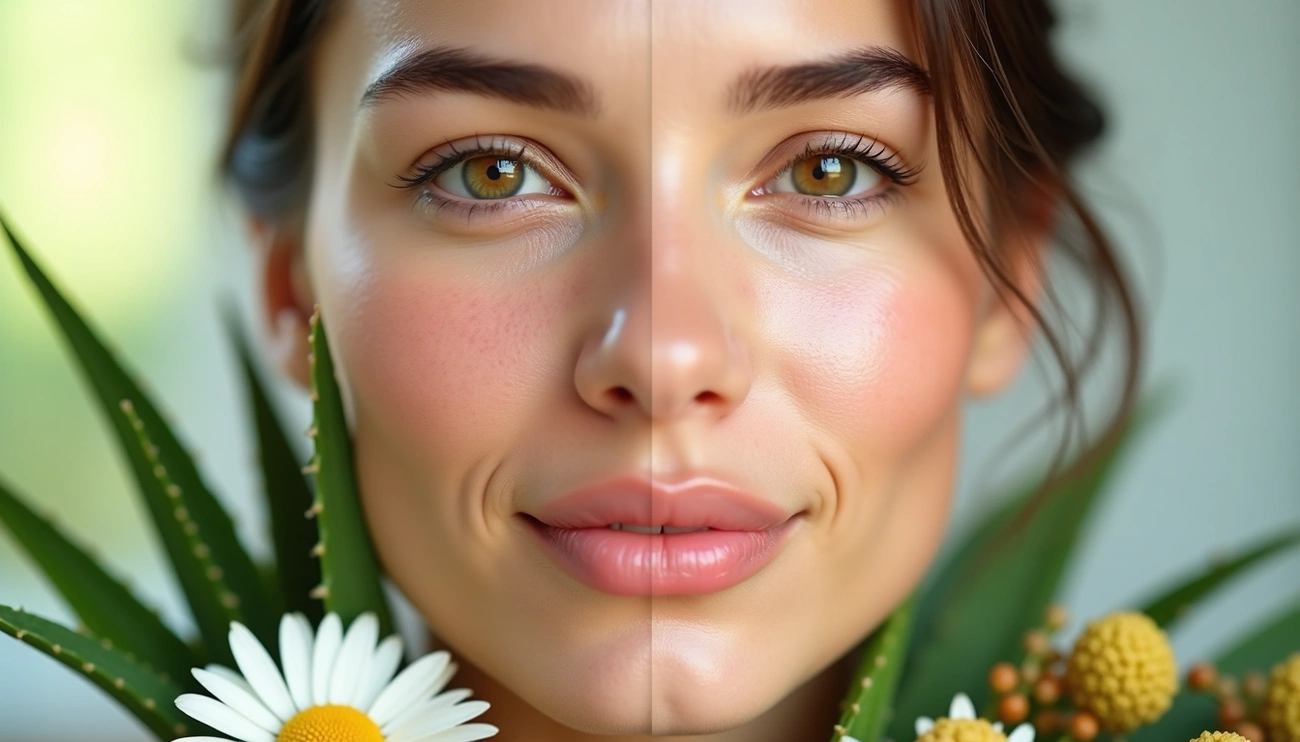
Anti inflammatory skin care has become increasingly important as we’ve learned how deeply inflammation affects our skin’s health and appearance. In fact, chronic inflammation, especially the low-grade, long-lasting kind, contributes significantly to skin aging—a process experts call “inflammaging”—resulting in fine lines, loss of elasticity, and uneven skin tone.
As the largest organ of our body, skin serves as the crucial interface between our internal systems and the external environment. However, when systemic inflammation occurs, it accelerates the breakdown of collagen, disrupts the skin barrier, and triggers immune responses that lead to redness, sensitivity, breakouts, dullness, and premature aging. Specifically, this chronic inflammation can manifest as eczema, rosacea, persistent breakouts, dryness, and irritation.
Fortunately, finding the right anti inflammatory skincare ingredients and products is key to preserving our skin’s health and radiance. In this guide, we’ll explore effective anti inflammatory face creams, serums, and other products that can transform irritated skin into a calmer, softer, and more resilient complexion. We’ll also share a straightforward routine that addresses inflammation at its source rather than just masking the symptoms.
Understanding Skin Inflammation
Skin inflammation happens when your immune system responds to perceived threats or damage. Understanding this process is crucial for building an effective anti inflammatory skin care routine.
What inflammation looks like on the skin
Inflamed skin typically reveals itself through visible symptoms that signal your body’s defense mechanisms at work. Most patients with skin inflammation (82%) experience itching or pruritus [1], while 80% develop redness or erythema [1]. Additionally, nearly half (48%) show visible swelling or edema [1].
Other common signs include warmth in the affected area, a sensation of tightness, blisters, pimples, and skin thickening. You might also notice your skin becoming dry, cracked, or flaky. These symptoms vary widely depending on what’s causing the inflammation and can appear anywhere on your body, although reactions on the face, neck, and hands are particularly common.
Short-term vs. chronic inflammation
Acute (short-term) inflammation represents your body’s immediate response to injury or irritation. This normal healing process follows three distinct stages and produces the classic signs described by Celsus 2,000 years ago: redness, heat, swelling, and pain [2]. This type typically resolves within six weeks and leaves no permanent damage.
Conversely, chronic inflammation persists long-term and can significantly damage your skin. It’s characterized by lymphocytes in the tissue and adaptive immune responses [2]. Instead of protecting you, this persistent inflammation breaks down collagen, disrupts your skin barrier, and accelerates aging. Conditions like eczema, psoriasis, and rosacea stem from chronic inflammation that fails to resolve properly.
Common triggers: environment, stress, and products
Environmental factors frequently spark skin inflammation, including allergens (like pollen and dust mites), irritants in cleaning products, and air pollutants. Furthermore, particulate matter smaller than 2.5 µm can worsen skin conditions by 34% to 121% through oxidative stress [3].
Stress plays a surprising role too. Studies confirm that psychological stress exacerbates conditions like psoriasis, atopic dermatitis, and acne [4]. Notably, a controlled study showed increased acne severity directly associated with student examination stress levels [4].
Beauty products often trigger reactions as well. Research found more than one-third of participants experienced at least one allergic reaction to cosmetic ingredients [5]. Fragrances and preservatives frequently cause problems, along with harsh ingredients in cleansers, exfoliants, and anti-aging products containing retinoids or alpha-hydroxy acids.
Creating an anti inflammatory skincare routine begins with identifying your personal triggers and selecting gentle products with soothing ingredients.
Ingredients That Calm Inflammation
Finding the right ingredients is the cornerstone of effective anti inflammatory skin care. Let’s explore key components that calm irritated skin through distinct mechanisms.
Niacinamide: the multitasker
Niacinamide (vitamin B3) stands out as a versatile anti-inflammatory agent. It works by blocking immune system chemicals that promote inflammation [6], consequently improving conditions like acne, redness, and hyperpigmentation. Moreover, niacinamide inhibits the production of pro-inflammatory cytokines (TNF-α, PGE2, IL-1, IL-6, and IL-8) [7], making it particularly effective for inflammatory acne with proven clinical results [7].
Centella Asiatica (Cica): healing and soothing
Often called “Tiger Grass,” Centella Asiatica contains bioactive compounds like asiaticoside and madecassoside that effectively reduce inflammation [8]. Primarily, it strengthens the skin barrier by promoting collagen production [8] and helps heal various conditions including eczema, psoriasis, and scars [9]. Its nickname comes from tigers reportedly rolling in it when injured [10].
Aloe Vera and Chamomile: natural calmers
Aloe contains emodin, which stabilizes mast cell degranulation to reduce itching and redness [11]. Similarly, chamomile’s anti-inflammatory properties stem from flavonoids and terpenoids [12]. Together, these natural ingredients create a powerful synergy that addresses multiple skin concerns simultaneously [12].
Green Tea and Vitamin E: antioxidant powerhouses
Green tea extract is rich in polyphenols, particularly epigallocatechin gallate (EGCG), offering both antioxidant and anti-inflammatory benefits [13]. Meanwhile, Vitamin E contributes to skin repair through its moisturizing and anti-inflammatory qualities [14].
Sea Buckthorn Oil: omega-rich nourishment
This golden oil from the Hippophae rhamnoides plant contains an impressive array of nutrients. It’s uniquely rich in gamma-linolenic acid (GLA), an omega-6 fatty acid that helps repair and regenerate skin [15]. Its anti-inflammatory properties effectively calm skin inflammation [15].
CBD and Reishi: modern anti-inflammatory agents
CBD offers powerful anti-inflammatory benefits by calming inflamed cells [16]. It can outperform vitamins C and D as an antioxidant [16]. Alongside CBD, reishi mushrooms provide strong anti-inflammatory action, making them effective for soothing conditions like acne and eczema [17].
What to Avoid in Your Routine
Building an effective anti inflammatory skin care routine isn’t just about what you include—it’s equally about what you eliminate. Certain ingredients can trigger or worsen inflammation, undoing all your good work.
Synthetic fragrances and alcohols
First and foremost, avoid products containing synthetic fragrances, which are leading causes of contact dermatitis and allergic reactions. Fragrances can trigger skin sensitivity manifesting as burning, stinging, and itching [18]. Products with alcohols should likewise be avoided as they cause dryness, irritation, and eczema [19]. Both ingredients can significantly damage your skin barrier, the essential protective layer that keeps irritants out and moisture in.
Harsh exfoliants and scrubs
Due to their abrasive nature, vigorous scrubs and harsh exfoliants can create micro-tears in your skin. Over-exfoliation leads to several telltale signs including irritation, redness, and inflamed skin [20]. You might even develop a tight, waxy texture that’s mistakenly perceived as a healthy glow but actually indicates excessive dryness [20]. Physical scrubs with ingredients like apricot pits and walnut husks are particularly problematic, as they can damage your skin and trigger inflammation.
Sulfates and drying cleansers
Cleansers containing sulfates like sodium lauryl sulfate (SLS) can cause “dryness, irritation and eczema” [21]. Besides stripping away natural oils, sulfates may clog pores and worsen acne for people with sensitive skin [22]. If your cleanser makes your skin feel tight or itchy, that’s a clear sign of a disturbed skin barrier [21].
Overcomplicating your routine
Above all, using too many anti inflammatory skincare products simultaneously can backfire. Overloading your skin with multiple formulations disrupts your skin’s natural barrier [23] and makes it challenging to identify which product might be causing issues [23]. As a result, simplifying your routine with a few high-quality products often proves more effective than a complicated regimen with many potentially conflicting ingredients.
How to Build an Anti-Inflammatory Skincare Routine
Now that we understand inflammatory triggers and soothing ingredients, let’s construct a practical step-by-step routine that truly calms irritated skin.
Step 1: Gentle cleansing
Begin with a fragrance-free, sulfate-free cleanser that respects your skin barrier. Look for formulas labeled “gentle” or “for sensitive skin” that clean effectively without stripping natural oils. Products containing glycerin or oat extract provide additional soothing benefits. Cleanse with lukewarm water—never hot—as high temperatures can trigger inflammation.
Step 2: Hydrating toner or mist
Apply a calming toner containing thermal spring water, panthenol, or hyaluronic acid to prep skin gently. This step helps balance pH after cleansing while providing a first layer of hydration. Opt for alcohol-free formulations that won’t dry out your skin. Accordingly, formulas with chamomile or rosewater offer excellent soothing properties.
Step 3: Anti-inflammatory serum
Choose serums with niacinamide, green tea, or madecassoside to address inflammation at its source. These powerful ingredients calm redness, irritation, and scarring. For maximum benefit, apply to clean, slightly damp skin to enhance absorption.
Step 4: Anti-inflammatory face cream
Select moisturizers containing colloidal oatmeal and ceramides for barrier restoration and inflammation reduction. These ingredients help rebuild your skin’s natural defenses against environmental aggressors. Ceramide-rich formulas lock in moisture and prevent future irritation.
Step 5: Mineral-based SPF
Finish with mineral sunscreens containing zinc oxide or titanium dioxide, which create a physical barrier on the skin’s surface. Unlike chemical formulations, these are generally better tolerated by sensitive or inflamed skin. Mineral protection helps prevent UV-induced inflammation—a primary cause of skin damage.
Optional: LED therapy and calming masks
Incorporate red LED light therapy 3-4 times weekly to reduce inflammation and promote healing. Studies show red and infrared light effectively calm inflammation and support skin regeneration. Supplement with anti-inflammatory masks containing turmeric, azelaic acid, or magnesium for intensive treatment during flare-ups.
Conclusion
Building an effective anti-inflammatory skincare routine requires both knowledge and commitment. Through careful selection of calming ingredients and elimination of irritating ones, you can significantly reduce skin inflammation and restore your skin’s natural balance.
Certainly, making the switch to anti-inflammatory skincare might seem overwhelming at first. After identifying your personal triggers—whether environmental factors, stress, or specific products—you can begin the journey toward healthier skin. Remember, simplicity often proves more effective than complicated multi-step routines.
Additionally, focusing on powerhouse ingredients like niacinamide, Centella Asiatica, and natural calmers such as aloe vera and chamomile will provide your skin with the tools it needs to fight inflammation effectively. Meanwhile, eliminating synthetic fragrances, harsh alcohols, and aggressive exfoliants prevents further irritation.
The five-step routine outlined above offers a straightforward approach to calming irritated skin. From gentle cleansing to mineral-based sun protection, each step serves a specific purpose in reducing inflammation and strengthening your skin barrier. Consequently, your skin becomes more resilient against future inflammatory triggers.
Above all, patience remains essential when addressing skin inflammation. Unlike temporary fixes that merely mask symptoms, a well-designed anti-inflammatory routine addresses the root causes of skin issues. Though results may take time, the long-term benefits—reduced redness, decreased sensitivity, improved texture, and slower aging—make the effort worthwhile.
We now understand that fighting inflammation represents one of the most important steps toward achieving healthy, radiant skin. Therefore, by implementing these strategies consistently, you can transform your complexion from irritated and inflamed to calm, balanced, and glowing.
References
[1] – https://pmc.ncbi.nlm.nih.gov/articles/PMC6234074/
[2] – https://pmc.ncbi.nlm.nih.gov/articles/PMC9969897/
[3] – https://pmc.ncbi.nlm.nih.gov/articles/PMC11318030/
[4] – https://pmc.ncbi.nlm.nih.gov/articles/PMC4082169/
[5] – https://www.webmd.com/allergies/cosmetics
[6] – https://www.webmd.com/beauty/what-to-know-about-niacinamide-skin-care
[7] – https://pmc.ncbi.nlm.nih.gov/articles/PMC11047333/
[8] – https://cityskinclinic.com/cica-skin-benefits/
[9] – https://www.vinmec.com/eng/blog/what-does-cica-do-for-the-skin-en
[10] – https://health.clevelandclinic.org/centella-asiatica-for-skin
[11] – https://pmc.ncbi.nlm.nih.gov/articles/PMC11010796/
[12] – https://www.bentica.in/blogs/bentica-beauty/aloe-vera-and-chamomile-effective-in-calming-stressed-skin?srsltid=AfmBOoomZ1TghqWRGCgbwrkRY_Qf5DF32nSJY1ab–R5uwT2vkHQaZDq
[13] – https://venturadermarts.com/the-role-of-antioxidants-in-skincare-protecting-your-skin-from-environmental-damage/
[14] – https://charlestondermatology.com/topical-antioxidants-an-extra-layer-of-skincare-defense/
[15] – https://upcirclebeauty.com/blogs/upcircle/sea-buckthorn-oil-skin-benefits
[16] – https://www.cannadorra.com/hemp-therapy-and-stories/can-cbd-be-suitable-for-skincare/
[17] – https://hemplucid.com/blogs/types-of-mushrooms/reishi-mushroom-benefits-for-skin
[18] – https://pmc.ncbi.nlm.nih.gov/articles/PMC10051690/
[19] – https://nationaleczema.org/blog/8-skincare-ingredients-to-avoid/
[20] – https://www.healthline.com/health/beauty-skin-care/over-exfoliating
[21] – https://www.nytimes.com/2023/12/06/well/live/skin-care-breakouts-products.html
[22] – https://www.healthline.com/health/beauty-skin-care/sulfates
[23] – https://www.schafskincare.com/blogs/schaf-blog/is-it-bad-to-use-too-many-skin-care-products?srsltid=AfmBOopGK7L_MMqcC12yTYvlf9uyM0icp9Tqp4A41vx6Lz4VkjDJtJzs

